Jaee Kim, Unsplash.
Below you can read the transcript and the English translation of the introductory address by Dalibor Plečić at the critics’ colloquium A View from the Outside.
The reception of translated literature and the challenges of criticism in the case of unfamiliar or lesser-known literary contexts.
Let me begin far away from literary theory: at a basketball press conference.
After the failure of the Serbian basketball national team at the 2005 European Championship, or maybe it was the team of Serbia and Montenegro, who can remember all the states, the legendary coach Željko Obradović, the most successful coach in history of European basketball, and for us Partizan supporters now painfully missed, gave a famously emotional statement. A foreign journalist asked for a translation of his emotional remarks and Obradović simply replied: “Very difficult to translate, my friend. Very difficult to translate.”
Of course, linguistically, everything he said could have been translated. But what he meant, the frustration, the cultural shorthand, the emotional subtext, that was the part resisting translation. Apparently, this moment quite captures the core tension we face today: translation is not a simple linguistic transfer, it is rather an attempt to cross worlds.
We are gathered here under the conceptual framework of the “View from Outside,” inspired by Dubravka Ugrešić, whose work quite often exposed the illusions of cultural transparency. I would like today to reflect on a persistent fracture line in our profession: the reception of translated literature from unfamiliar or lesser-known contexts.
Critics often comfort themselves with the idea that “quality is universal.” But Pascale Casanova’s The World Republic of Letters offers a far more sobering picture. For her, the literary world is not an egalitarian exchange zone, but it is a steep hierarchy, where literary capital accumulates in a few centers such as Berlin, Paris, London, New York and so on. The periphery sends manuscripts uphill, hoping to be seen. Therefore, here lies the question: When a text from a world we barely understand arrives to us, do we read it as literature or maybe as sociology? This hierarchy it is geographic, and linguistic as well.
As Boris Buden and translation studies remind us, the global translation economy is radically asymmetric: 60 to 70% of all translated books worldwide are translated from English. French and German follow with around 10% each. “Peripheral languages”, including Russian or even Spanish (a whole continent speak that language) account for less than 3%. And “marginal languages,” such as Chinese, spoken by more than a billion people, represent less than 1% of global translations.
If this is the fate of large languages, imagine the position of truly small ones as ours. And there is more. According to the major study European Languages in the Digital Age, conducted by over 200 language-technology experts: 21 out of 30 European languages have weak or nonexistent digital support. Many will not survive the digital era. A language may survive in daily speech yet disappear from literature, science, culture, and public life, becoming a new medieval vernacular, while English becomes the new Latin.
Buden formulates it with brutal clarity: When a language loses digital infrastructure, it loses its future. And when it loses its future, of course it loses its literature. There can’t be future without literature. This places our critical work in a new, urgent context: we are not only interpreters, but we are also custodians of linguistic survival.
The first interpretive danger is what can be named as the “Anthropological Trap”. As Gayatri Spivak warns, Western criticism often reads peripheral texts not for their aesthetics but for their information value. When we lack cultural or literary knowledge, we stop reading for style, structure, and metaphor, and instead we read for symptom. The novel becomes documentation of trauma, evidence of oppression, an ethnographic report. We reduce authors to what Spivak calls “Native Informants”, allowed into the Republic of Letters only if they testify about their wounds. If the first danger concerns how we read, the second concerns how we expect translated literature to sound. Lawrence Venuti critiques the Anglo-American obsession with fluency, the idea that a good translation “reads as if it were written in English.” In that case smoothness becomes a virtue, and strangeness becomes a blemish.
This drives domestication, in other words the erasure of cultural texture. Tim Parks names the result the “Dull New Global Novel”: books pre-polished for cosmopolitan readability, stripped of their linguistic and cultural fibers. These works are not translated, they were born translated, engineered for global capitalistic markets, and we all know and can see how crazy capitalism is nowadays. And here lies a troubling question: Are we, as critics, entagled in flattening and leveling world literature?
Our digital age speeds up this flattening. If certain language lacks corpora, NLP resources, machine-translation compatibility, or digital archives, definitely becomes technologically irrelevant. We all know (even we born in analogue world) that in this digital world technological irrelevance as a matter of fact becomes cultural extinction. This is the crisis Buden warns of: small languages risk becoming invisible, their literatures lost before anyone has the opportunity to read or translate them.
Into this fragile ecosystem boldly enters almighty AI, a force that magnifies linguistic inequality. AI systems: privilege dominant languages, normalize stylistic variation, erase cultural noise, and reduce untranslatable elements to statistical anomalies. AI may soon translate more pages per day than humans do per year, but is translation without understanding actually real reading. It is compression. If small languages lack digital representation, they risk being excluded from AI’s linguistic universe entirely, so their literature becomes algorithmically invisible. In such a world, the danger is not misinterpretation, the danger is nonexistence.
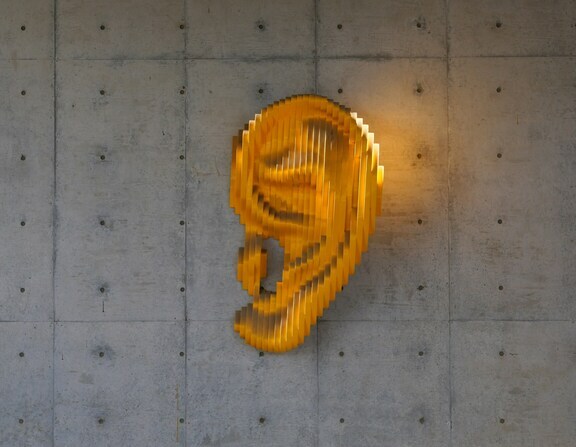
In order to resist these pressures, Azade Seyhan, in a way, calls for cultivating a Third Ear which is a multilingual sensitivity that listens for cultural friction rather than seamlessness. The Third Ear acknowledges that we cannot fully possess a foreign text, but we can approach it ethically, humbly, and without demanding its assimilation. In many ways this resonates with Dubravka Ugrešić’s ON-Zone, the space outside fixed national identities where literature flourishes.
B. Venkat Mani’s notion of bibliomigrancy reminds us as well that books are the real migrants. And we, critics, writers, editors, festival organizers, readers are border guards. In that sense we can strip-search texts for political utility, force linguistic assimilation, or open a transnational space where foreignness is not a flaw, but a literary value. The choice we make shapes what survives in world literature, and what disappears.
Let me return, finally, to my beloved Željko Obradović and his weary, understated line: “Very difficult to translate, my friend.” The challenge was clearly not about language, but about experience. And this, actually is the message I would like to leave you with: The real problem is never whether something is difficult to translate, the real challenge is whether we are willing to understand. Not understand the others, which is not possible considering that we barely understand ourself, but to understand the texts, and understanding requires: patience, humility, curiosity, and the Third Ear Seyhan describes.
If we cultivate that kind of listening, unfamiliar texts do not become easier, but we become better readers. And so, when the next book arrives from a world we do not yet grasp, perhaps the right response is simply:
“Very difficult to translate, my friend — but are we ready to understand?”